GTA 6 at 30fps on both consoles: why Xbox still feels smoother than PS5
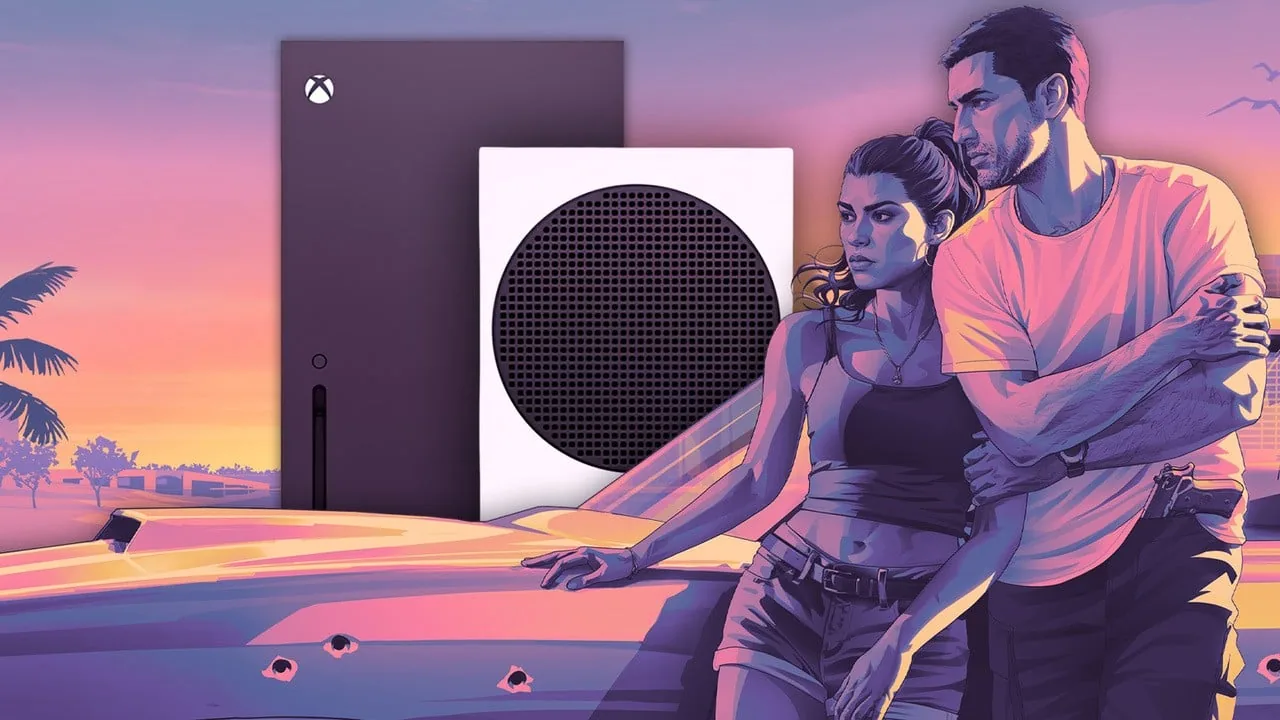
Digital Foundry's four-console analysis, published on 18 November 2026 after more than 100 hours of testing, found GTA 6 targeting 30fps everywhere with no 40 or 60fps mode, but a smoother presentation on Xbox Series X and Series S because the console runs the game inside a 120Hz variable refresh rate container at OS level.
GTA 6 runs at the same 30 frames per second on PlayStation 5 and on Xbox Series X, and yet the two do not present motion identically. The reason is a platform feature rather than a Rockstar one: Xbox runs every game inside a 120Hz variable refresh rate container at operating-system level, while PlayStation's system-level VRR only operates above 48 frames per second and has no low frame-rate compensation, so at 30fps it cannot engage at all. Digital Foundry published that finding on 18 November 2026 in its four-console comparison, built on more than 100 hours of testing across PS5, PS5 Pro, Series X and Series S, and RockstarINTEL relayed and tested it the following day.
The 48fps wall, measured in frame times
Variable refresh rate works by letting the display wait for the next frame instead of refreshing on a fixed clock. That only helps while the frame rate stays inside the panel's VRR window, and on PlayStation the bottom of that window is 48fps according to Digital Foundry — 20.83 ms per frame. GTA 6's 30fps budget is 33.33 ms, 60% longer than the window allows.
Low frame-rate compensation is the usual escape hatch: below the floor, the console repeats each frame so the display keeps receiving a signal inside its range, so a 30fps game is presented at 60Hz and stays variable. Digital Foundry reports that PlayStation's implementation does not offer it, which is why forcing VRR on for GTA 6 changes nothing measurable on Sony's console.
What a 120Hz container actually changes
Xbox's version is simpler and broader. According to Digital Foundry, Microsoft's consoles can run the game in a 120Hz VRR container as an operating-system feature, so the developer does not have to implement anything: RockstarINTEL puts it as a setting that applies to every title, whether the game asks for it or not.
The arithmetic explains the gain. A 120Hz output gives the display a slot every 8.33 ms, and 30fps divides into it exactly — four slots per frame. When a frame overruns, the panel is late by at most 8.33 ms instead of the 16.67 ms a 60Hz output imposes, which halves the worst-case judder. This part is our calculation; Digital Foundry only reports a "slightly smoother experience", and RockstarINTEL, which toggled VRR off on its own Series X to compare, describes a difference it calls "subtle yet noticeable".
What the container does not fix: 180 ms
Digital Foundry's input-lag measurement is the useful counterweight to the enthusiasm. On Series X it recorded around 180 ms of end-to-end camera latency, including a wireless controller and roughly 10 ms of display latency, and the figure did not change substantially between 60Hz, 120Hz and 120Hz VRR. At 30fps, 180 ms is about 5.4 frames of delay.
The gain is therefore about how the image is presented, not how fast the game answers. Latency at that level is in the same class as Red Dead Redemption 2 and GTA 5 Enhanced, per the same analysis, with Digital Foundry judging the response perceptually a little better in GTA 6. No display setting removes it.
The 120Hz entry in the PS5 files that never shipped
One detail is worth flagging against our own earlier reporting. On 9 November, strings pulled from the PlayStation 5 pre-load listed a "120Hz / High Framerate" mode with no VRR, as RockstarINTEL reported at the time. At launch, Digital Foundry found no 40fps or 60fps mode on any console and no 120Hz option on PlayStation at all.
A capability string records what an engine can switch on, not what a menu offers. When those files surfaced we noted that 40fps divides cleanly into 120Hz, three refreshes per frame at 25 ms, and that it was the only plausible use of the flag. It never became a shipping mode on any platform.
Four builds, four budgets
Resolution, not frame rate, is where the four versions genuinely diverge. PS5, PS5 Pro and Series X all render at 2560x1440, or 3,686,400 pixels, and upscale to a 4K target of 8,294,400 — a 2.25x stretch. Only the Pro reconstructs that with PSSR; the other two use Rockstar's spatial TAA, which Digital Foundry describes as visibly softer. Series S renders at 720p, 921,600 pixels, four times fewer than 1440p, and reaches roughly 1080p through FSR 4 — the first shipping Xbox Series game to use that upscaler, according to the same analysis.
The frame data follows the same order. Digital Foundry held a consistent 30fps on PS5 Pro across about 75 hours of play, with brief dips to 24fps (41.7 ms) when destroying vehicles with a grenade launcher. Base PS5 and Series X flick between 30 and the high 20s during traversal and combat and can reach the low 20s in the worst cases, while Series S spends large stretches in the mid-to-high 20s and drops towards 20fps in heavy destruction, with the teens possible. RockstarINTEL's own "as low as 22fps" figure sits inside that base-console range rather than the Pro's.
Turning it on
On Xbox the setting lives in Settings, then General, then TV and Display Options, then Video Modes, then Variable Refresh Rate, where the options are Always On or Gaming Only — the path RockstarINTEL documents alongside its test. It requires a display that supports VRR, and it will not raise a single frame. On a Series S, the container smooths the delivery of a 25-to-30fps game; it does not rescue it.
The verdict that survives the nuance
Digital Foundry's conclusion is unchanged by the VRR detail: the PS5 Pro is the best place to play, with the steadiest frame rate, the sharpest image and ray-traced shadows no other console gets. Base PS5 and Series X are close enough to each other that the Xbox container is a comfort rather than an advantage worth switching platforms for, and Series S remains the hardest version to recommend. No console offers a 60fps mode, no patch has promised one, and the PC version still has no date.