GTA IV gets native DLSS, FSR and HDR via the DLSS-IV mod — 17 years after release, for 4% more FPS
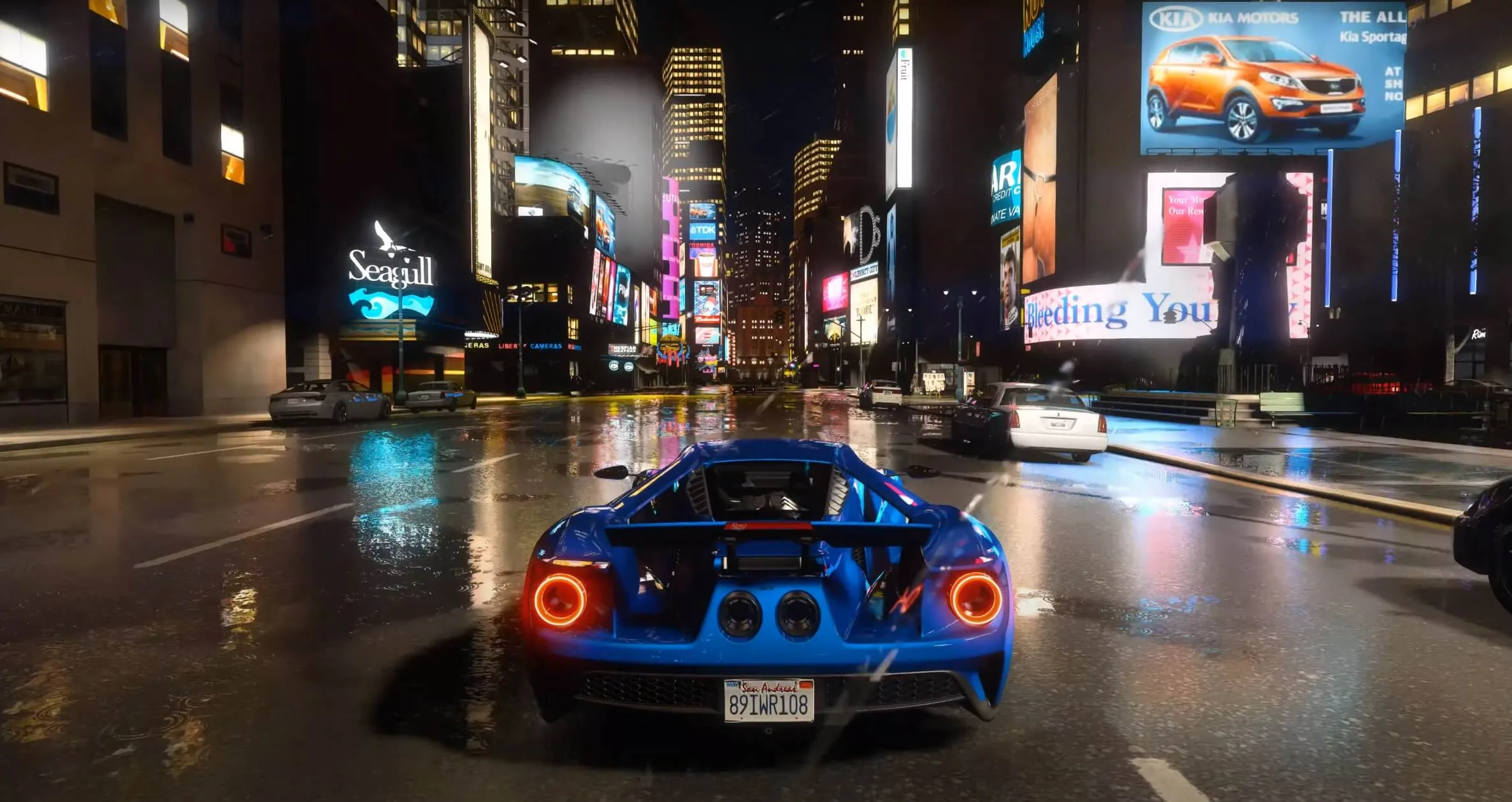
DLSS-IV, a mod by ChunkLeChuck, brings native DLSS, AMD FSR and real HDR output to Grand Theft Auto IV — first uploaded to Nexus Mods on 20 September 2026, already at version 1.0.6.1 on 24 September. The author's benchmarks on an RTX 4090 at 4K show frame-rate gains of only 3.4% to 4.6%, because GTA IV is limited by its processor, while DLAA and FSR Native AA cost about 6%.
The short answer
Grand Theft Auto IV now runs with native DLSS, AMD FSR and true HDR on PC — 17 years and 9 months after the game's PC version launched on 2 December 2008. The mod is called DLSS-IV, it was built by modder ChunkLeChuck, and it was first uploaded to Nexus Mods on 20 September 2026 before reaching version 1.0.6.1 on 24 September 2026, according to the mod's own file page.
The number to remember is not a frame rate. It is 4%, because that is roughly everything the upscalers buy on a game that has been processor-bound since 2008.
What DLSS-IV actually does
The mod page describes it plainly: native DLSS and FSR upscaling and anti-aliasing, plus proper HDR support, "while also increasing the game's performance". As DSOGaming reports, this is not a ReShade-style filter laid over the existing renderer — the project runs through DXVK and Vulkan and depends on FusionFix, the community patch that has spent years repairing GTA IV's technical debt. That dependency is what separates it from the FXAA and SMAA presets the community has used for a decade.
The adoption numbers, read on the mod page on 25 September 2026: 6,016 unique downloads, 7,842 total downloads, 142 endorsements, 32,027 views, 268 forum posts and three filed bug reports. The changelog lists five releases between 20 and 24 September — 1.0.3 through 1.0.6.1 — a patch pace that says as much about the state of the project as any feature list.
The numbers, mode by mode
DSOGaming and ixbt.games both quote the author's own benchmark, run at 4K with maximum settings on an RTX 4090 paired with a Ryzen 9 7900X3D:
- DLSS Quality: 181 FPS, about 3.4% faster than vanilla, a figure ixbt.games rounds to 3.5%
- FSR Quality: 182.4 FPS, about 4.2%
- DLSS Balanced: 182.6 FPS, about 4.3%
- FSR Ultra Performance: 183.1 FPS, about 4.6% — the fastest configuration tested
- FSR Native AA: 165.7 FPS, about 5.3% slower
- DLAA: 164.6 FPS, roughly 6% slower
Rockstar Actu delivers the same verdict more bluntly: a maximum of about 4%, or roughly six frames per second on that machine. Note the shape of the list — the two modes that render at full resolution and simply replace the game's missing anti-aliasing cost performance instead of saving it.
Why 4% is the right number
GTA IV was never GPU-bound. The 2008 build of RAGE pushes its draw calls and physics onto the processor, so dropping the internal render resolution frees almost nothing. Rockstar Actu notes that frame rate stopped being a problem years ago while the aliasing never went away — and that is the real target here: the stair-stepped edges on Liberty City's suspension cables and street-lamp brackets, which FXAA and SMAA could only blur at the cost of sharpness.
Motion vectors, the part that was genuinely hard
Every temporal upscaler needs to know how each object moved between two frames to reconstruct a higher-resolution image. GTA IV shipped three years before DLSS existed and provides none of that data, so DLSS-IV generates its own per-object motion vectors from the game's draw calls, Techtroduce reports. ixbt.games describes the outcome in the same terms: a real HDR signal rather than a brightened image, and jagged edges that are simply gone. The HDR path reuses the Xbox 360 gamma curve from FusionFix's FusionShaders.
The credit list is equally instructive. The mod page names DLSS5-Feeder by Jean-Laurent Rouzies as the protocol and Vulkan interop it is built on, with elements of dlss5-dx11-bridge by NIGos, plus DXVK and AMD's FidelityFX FSR 3.1 and RCAS filter; the 1.0.4 changelog confirms the main download now bundles NVIDIA's nvngx_dlss.dll. That naming places DLSS-IV in the same technical neighbourhood as the DLSS 5 experiments that swept PC gaming in August 2026, when a leaked NVIDIA library was injected into more than a dozen games — GTA 5 and GTA IV among them. What the mod page never states is which DLSS generation it ships today: treat the branding as unconfirmed, and the DLSS support itself as beyond doubt.
What you need to install it
Per the mod page and Rockstar Actu's step-by-step guide:
- FusionFix first — it is a hard, off-site requirement.
- GTA IV version 1.0.8.0 or the Complete Edition, which bundles The Lost and Damned and The Ballad of Gay Tony.
- Graphics API set to Vulkan; DLSS-IV ships its own vulkan.dll, which replaces the copy FusionFix installs.
- DLSS on an RTX 20-series card or newer; FSR 3.1.5 on every other GPU; FSR 4 automatically on Radeon RX 7000 and RX 9000, with fsr_version in DLSS-IV.cfg to force FSR 3.1 instead.
- A compatible display for HDR, plus in-game anti-aliasing set to Off so the upscalers do not stack with FXAA or SMAA.
One correction worth making: headlines have variously called this an FSR 3.1 mod and an FSR 4 mod. The 1.0.4 changelog settles it — FSR 4 on RX 7000 and RX 9000, FSR 3.1.5 on everything else.
The caveat nobody should skip
Every frame-rate figure above comes from the mod author's own machine. Digg flagged exactly that when the mod surfaced: the performance claim comes from the mod listing rather than from independent benchmark testing. That does not make it false, but no third-party outlet has reproduced those numbers yet, and on a game this CPU-bound the results will vary far more between processors than between graphics cards.
What this says about GTA VI
GTA VI arrives on 19 November 2026 on PS5 and Xbox Series X|S, and Rockstar still has not dated a PC version. So the most modern-looking Grand Theft Auto on PC in late 2026 remains a 2008 game sharpened by volunteers — a reminder of two things. GTA IV never received a remaster, since the 2021 Definitive Edition covered GTA III, Vice City and San Andreas only. And the technique on display here, synthesising motion vectors a 2008 engine never produced, is the same problem any future GTA VI PC port will not have to solve.