Sony: GTA VI is the biggest launch in PlayStation history — 39 million players, 683 million hours, a concurrency record
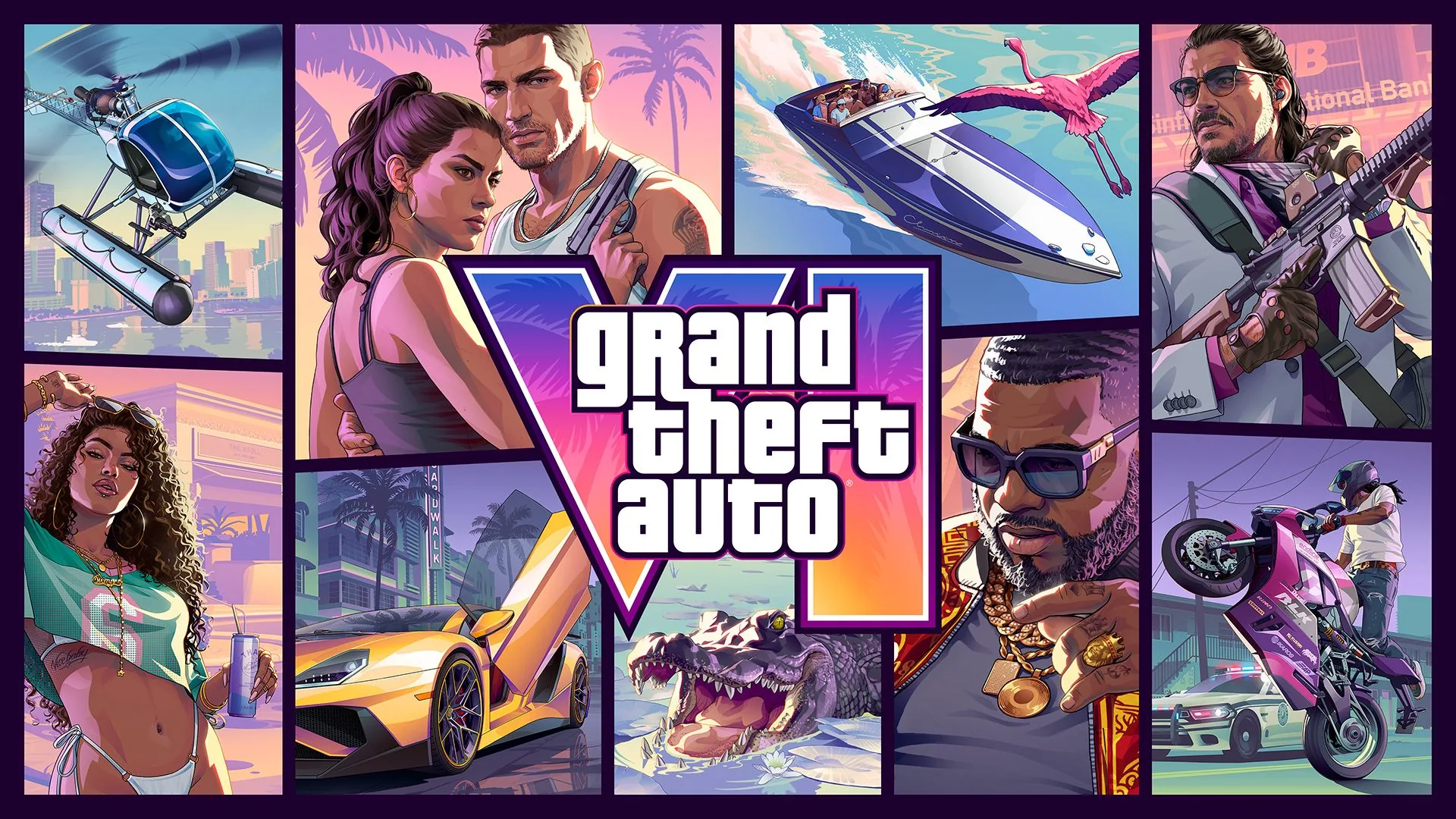
Sony called Grand Theft Auto VI the biggest game launch in PlayStation history on 23 November 2026, across three decades and five console generations: more than 39 million unique players on PS5, a record for concurrent players for any game on PlayStation (no number, no previous holder named), 683 million cumulative hours of play and an average of 17.4 hours per player over the window ending 22…
Sony put its own numbers on the launch on 23 November 2026. In a post on PlayStation.Blog, Tim Turi, content communications manager at Sony Interactive Entertainment, called Grand Theft Auto VI "the biggest game launch in PlayStation history, across three decades and five console generations", and attached four figures to the claim: more than 39 million unique players on PS5, a record for concurrent players for any game on PlayStation, 683 million cumulative hours of play, and an average of 17.4 hours per player. All of it covers the window ending 22 November 2026 — launch day plus four days.
This is the first platform-level data set published by anyone other than Take-Two, and it is the only one that counts players rather than units. It is also the only statement so far that frames GTA VI against PlayStation's own history rather than against GTA V or the box office.
What Sony measured, and what it left out
Four sentences carry the whole claim, and each stops short of the number that would make it checkable.
The concurrency record is the weakest of them. Sony says GTA VI "set a new record for the highest number of concurrent players for any game on PlayStation, surpassing previous records across multiplayer, free-to-play, and single-player titles" — no figure, no named predecessor, no date for the peak. The comparison set is broad enough to be meaningful — beating every multiplayer, free-to-play and single-player title on the platform at once would be a first — and vague enough to be unfalsifiable as published. PlayStation has form here: it does not publish per-game concurrency figures, unlike Steam.
The player count is cleaner. "More than 39 million unique players have experienced Jason and Lucia's story in Grand Theft Auto VI on PlayStation 5" counts PSN profiles that launched the game inside the window, not copies sold. Two profiles on one console, a shared disc, a second account: all count as players without a second sale. That distinction matters below.
The engagement figures are the most useful, because Sony gave two of them and they can be tested against each other.
17.4 hours is the number that checks out
Take the cumulative hours and divide by Sony's own per-player average: 683 million ÷ 17.4 = 39.25 million players. That lands just above the "more than 39 million" Sony states in the same post. The two figures agree to within the rounding of a one-decimal average, which is the sort of internal consistency that a marketing department inventing numbers usually fails to produce.
Read the other way, 683 million hours is 28.5 million player-days — 78,000 years of play — spread over four days and nights. Distributing it evenly across the four-day window (19 to 22 November) puts 7.1 million players in-game at any given moment on average. Play is never evenly distributed: it clusters in the evening, peaks at weekends and decays after the first session. A mean of 7.1 million therefore sets a floor that the peak must exceed, and the true peak on Sunday 22 November — the day Alinea Analytics counted more than 40 million logins across both consoles — is necessarily higher still. Sony has that number and has not published it.
39 million players, 33.7 million copies
Alinea Analytics, reported on 23 November, put GTA VI at 44.9 million copies sold through to players with a 75/25 split in PS5's favour — about 33.7 million PS5 copies against 11.2 million on Xbox Series X|S. Sony now reports 39 million PS5 players. The gap is 5.3 million, or 15.7%, and it runs in the direction that matters: more people played on PS5 than a third-party tracker thinks bought the game there.
Profiles per console close part of that gap without any contradiction. A household with one copy and three PSN accounts can produce three "unique players"; a second account made for a fresh save produces another. Sony counts experiences, not sales, and says so by using the word players rather than units. The gap also raises the possibility that Alinea's sell-through estimate is simply low — its PS5 figure sits below the number of distinct people Sony watched launch the game.
The honest reading is that neither number can now be used to correct the other. Sony's 39 million proves the PS5 audience is larger than Alinea's PS5 copy estimate, not that 39 million copies were sold. Take-Two's audited fiscal third-quarter filing, covering this period, remains the first document in which anyone signs their name to a sell-through total.
The console effect is the underreported part
Two lines in the post describe hardware, not software, and they are where the launch stops being a games story.
Sony reports the largest number of newly connected PS5 consoles on a single day since the console's launch, outside of end-of-year holidays, and that GTA VI was the first game played on 70% of new PS5 consoles since release. Both statements describe the same phenomenon from two angles: a measurable share of the launch was hardware — consoles bought for this game, in the middle of November rather than at Christmas. French retail reported PS5 stock shortages on 24 November, three days after the first reports of the same thing.
For a platform in its sixth year, that is the number with commercial consequences, and it took a third party to publish it.
The hardware lift, measured
Circana put numbers on that story on 24 November, and RockstarINTEL relayed them: for the week ending 14 November, US PlayStation 5 unit sales were 2.4 times the same week a year earlier, and Xbox Series X|S sales 2.3 times, which the tracker describes as "a significant surge in US new video game hardware buying". PS5 Pro accounted for less than 10% of those sales. Circana said launch-week data would follow a week later.
The timing is the interesting part. The week ending 14 November is the days immediately before launch, so those consoles were bought in anticipation — on pre-loads, reviews and marketing — rather than on day-one word of mouth. The mix is the second: fewer than one PS5 in ten sold that week was the mid-generation Pro, which puts the hardware wave almost entirely on the base console.
The ratio against the installed base is the figure Sony left unstated. RockstarINTEL points out that against the 100 million PS5 consoles Sony said it had sold earlier in November, 39 million players is close to 40% of every PS5 in the world, reached inside four days. Held against Alinea's 33.7 million PS5 copies, the gap does not close: two in five PS5 owners played the game, while the copy estimate puts it in one in three hands. The profiles-per-console caveat applies to that ratio exactly as it does to the 5.3 million above.
What is still unpublished
Microsoft has said nothing equivalent for Xbox Series X|S. Rockstar has published records about its own launch but no engagement data. The concurrency record stands as a sentence without a figure, and the CE-108255-1 crash on PS5 remains unresolved by the first post-launch patch, which is the one cloud over the numbers Sony is celebrating — an average of 17.4 hours per player says nothing about how many of those hours ended at a crash screen.