GTA 6 hands-on: 30fps holds on Series X, power lines smear, and mission replay is gone
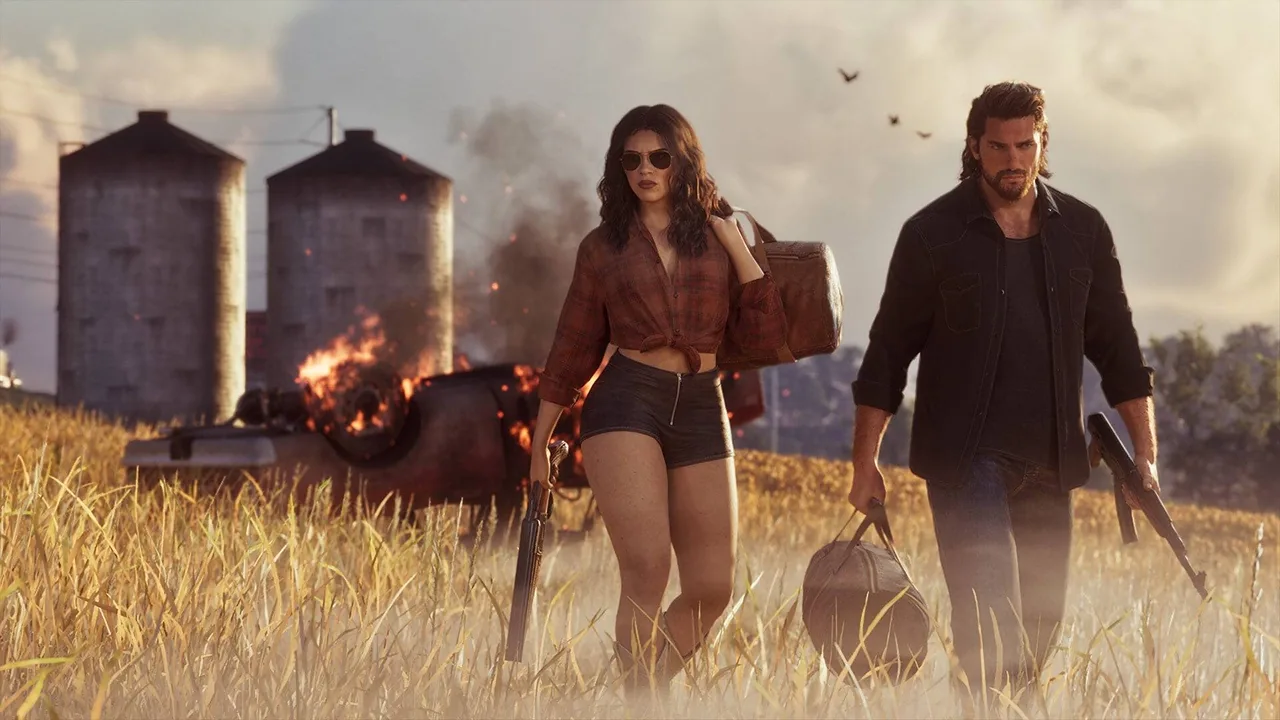
RockstarINTEL's Xbox Series X hands-on, played on 18 November 2026 through the New Zealand region switch, reports 30fps that is 'mostly fine' at walking pace but 'sluggish' in high-speed chases, ghosting on power lines, and no mission replay — 15 manual save slots are the only way back. IGN's four-console session measured dips to 24fps on Series S and none on PS5 Pro.
What the first hands-on actually adds
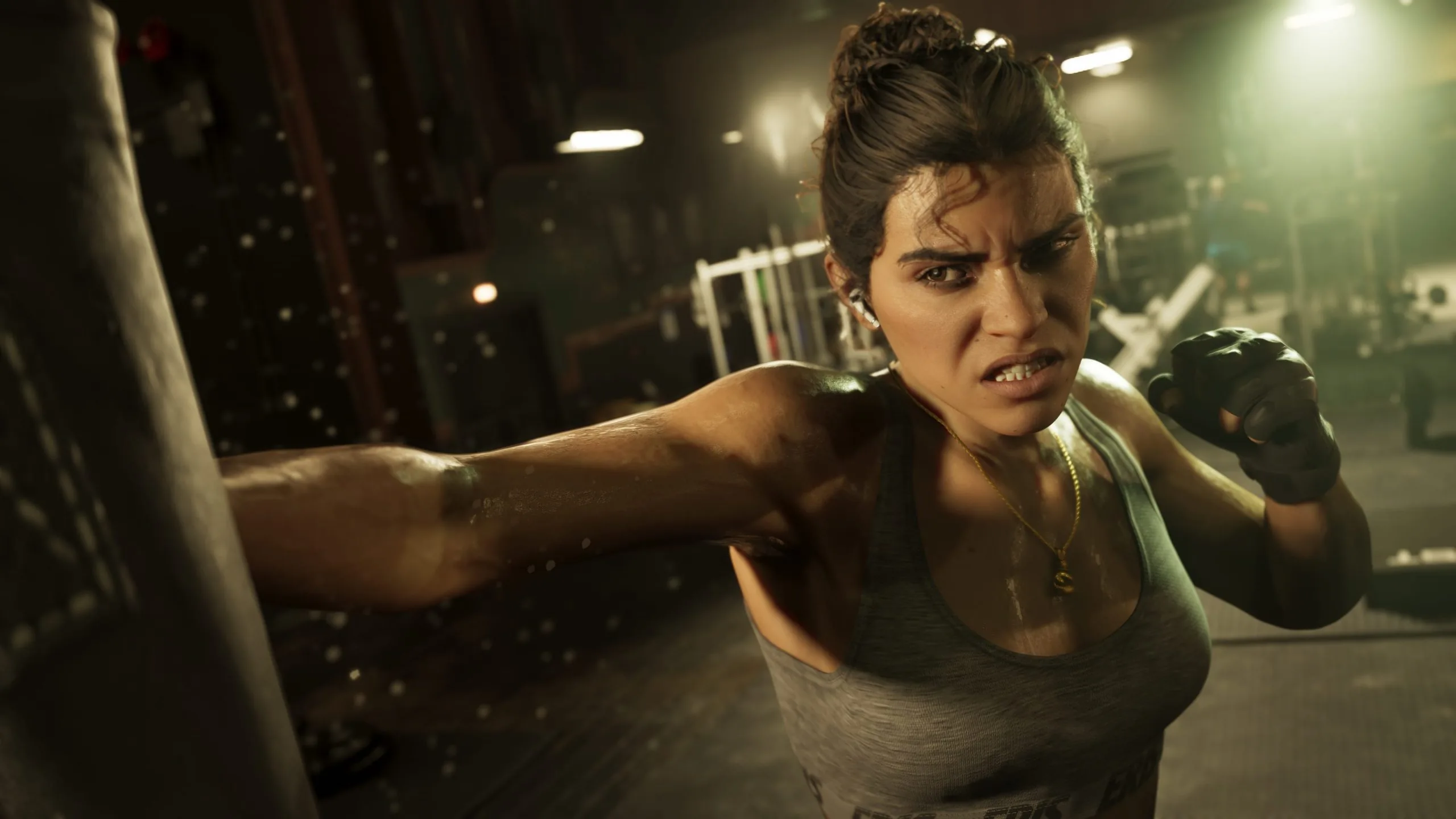
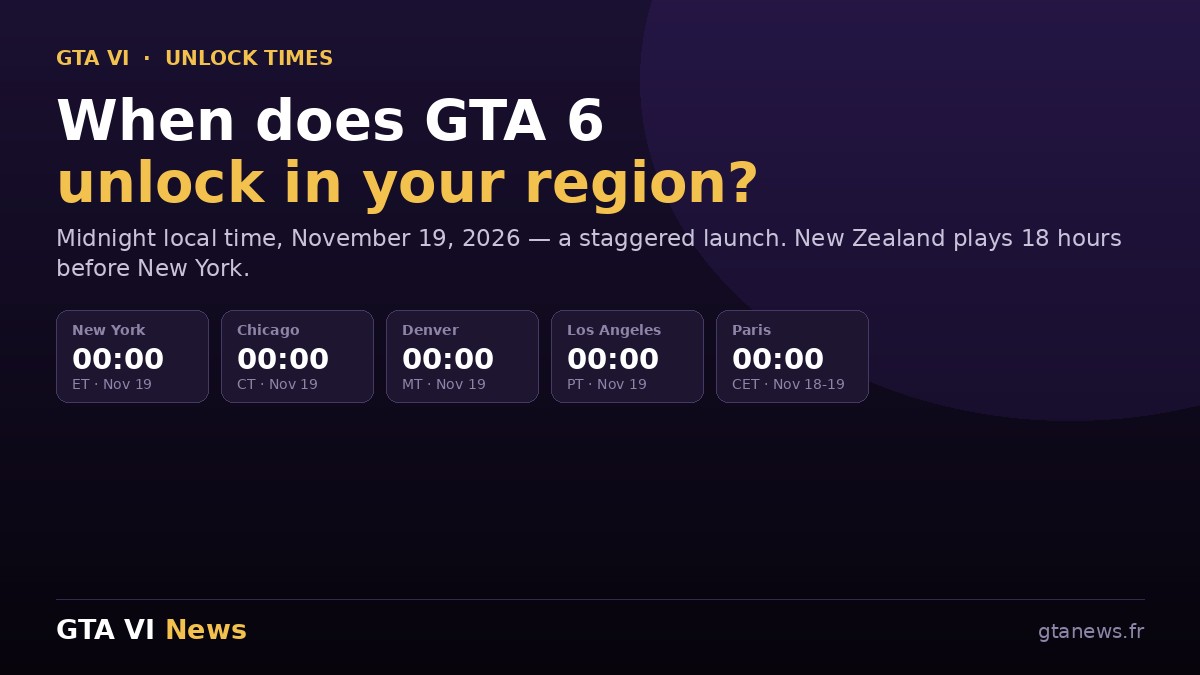
RockstarINTEL published the first hands-on impressions of Grand Theft Auto VI on 18 November 2026, ahead of local-midnight rollout in most of the world, by switching an Xbox console's region to New Zealand — a workaround that works because Rockstar releases the game at midnight per time zone. The value of the piece is not the enthusiasm but the three complaints: a frame rate that only just holds, ghosting on thin geometry, and no way to replay a finished mission.
Those complaints can now be checked against numbers. Digital Foundry published two technical videos on launch day, summarised by VGC and Twisted Voxel, and IGN ran a separate report on the save system. Read together, the accounts agree more than they differ — and one RockstarINTEL observation turns out to be the visible symptom of a rendering choice Digital Foundry measured directly.
Thirty frames per second, described one way and measured another
RockstarINTEL's author describes himself as a high-frame-rate PC player and calls the result "mostly fine" when the game is taken slowly: "in chaotic moments such as high speed pursuits it just feels sluggish". He adds that GTA VI "sticks to its target frame rate until it gets in really demanding scenarios", as GTA IV and GTA V did not always manage.
The image is the more specific complaint. Power lines, he writes, "not only don't look smooth but smear the screen", and the effect worsens against bright backgrounds such as the sky while driving. His experience is on Xbox Series X; he adds that PSSR on PS5 Pro "seems" to clear this up "a fair bit" — an impression formed from footage, not from playing the Pro build.
Digital Foundry's measurements fill in the mechanism. Per VGC, Oliver Mackenzie found Series X running at a "relatively fixed internal resolution of 1440p" and "maintaining a 33 millisecond frame time through busy combat and traversal", with dropped frames in "especially busy chases or firefights". On PlayStation, per Twisted Voxel's reading of the same analysis, PS5 and PS5 Pro both render internally at 1440p, but the Pro reconstructs with PSSR while the base console relies on spatial upscaling.
That pairing explains the smearing: 1440p stretched to 4K by a spatial filter is exactly where thin, high-contrast lines break up. This is our inference, not something either outlet states — RockstarINTEL never played a Pro build, and Digital Foundry did not examine power lines.
What each frame costs, in milliseconds
Thirty frames per second is a 33.3 millisecond budget per frame. The "mid to upper 20s" Mackenzie measured on Xbox Series S means 37 to 40 milliseconds — 11% to 20% longer — and his "about 20fps at worst" in demanding encounters is a 50 millisecond frame, half again the target. On PS5 Pro his explosion stress test dipped to 24fps, or 41.7 milliseconds.
Those figures make the subjective reports legible. A steady 33 ms cadence feels responsive because latency stays constant; 40 ms frames alternating with 33 ms frames read as stutter although the average is close. RockstarINTEL's "still responsive in the hand" matches Digital Foundry's Series X finding, and the two accounts diverge only in the busy scenes both of them flag.
Four consoles, four accounts — and one disagreement worth keeping
The most useful cross-check arrived later on launch day, when IGN's Jacqueline Thomas published a hands-on that ran the same 30-minute prologue on all four current machines: Xbox Series S, Xbox Series X, PlayStation 5 and PlayStation 5 Pro. Her per-console readings are the granular counterweight to RockstarINTEL's single-console report, and they put numbers on the phrase "30fps feels different depending on what you're playing it on".
On Series S she measured "a pretty steady 30fps" with "occasional dips as low as 24fps", plus camera turns that fall to 27-28fps and "movement that feels like it's dragging on something". On the base PS5 and the Series X the game stayed "pretty much locked at 30fps, with only occasional dips to the 27-29 fps range". On the PS5 Pro she recorded no dips at all, with PSSR reconstruction and ray-traced shadows she calls "a godsend in some of the darker scenes".
One point in that report contradicts Digital Foundry, and it is worth keeping rather than smoothing over. PC Gamer's summary of Digital Foundry's tech review states that the base PS5 is "struggling to consistently maintain 30 fps even when just driving around the city" — a harsher verdict than IGN's 27-29fps. The likeliest explanation is scope, not conflict: IGN played the prologue and first mission, about an hour, and says so — "there is going to be some chaos later in the game that's likely going to wreak more havoc on the 6-year-old CPU". Digital Foundry's capture covers that chaos; IGN's does not yet.
Digital Foundry's long run also supplies the figure that matters most for a purchase decision. Per PC Gamer, the tech review found "not a single noticeable stutter or drop in over 50 hours of gameplay" on PS5 Pro, with brief drops to 24fps only when cars are blown up in the street — 41.7 ms against the 33.3 ms target. IGN's buying advice is blunter: a PS5 Pro now costs "more than $1,400", roughly double the base console, for cleaner shadows and those few frames.
Ten minutes lost to quick resume, and a fifteen-slot budget
The hands-on also produced a concrete data loss: after pausing and putting the Xbox into sleep mode, RockstarINTEL reports the game "did not quick resume" and returned him to before his last checkpoint — roughly ten minutes of progress. Quick resume worked at other times, so the failure is intermittent, and manual saves are the only defence.
That defence is capped. IGN reports 15 manual save slots and recommends a new save "every 7% or so through the story". Run the arithmetic: 100 divided by 7 is roughly 14 saves for a full campaign — 14 of the 15 slots, leaving one for a branching decision worth revisiting. Across a story IGN puts at 50 to 100 hours, that is one slot per 3.3 to 6.7 hours of play.
TalkEsport's mission guide makes the cap bite harder: it lists 93 story missions across five chapters, or 6.2 missions per slot if every slot is used. Saving at the start and end of each chapter alone consumes ten of the fifteen.
Eurogamer reached the same budget from the opposite direction, after a full playthrough rather than a hands-on. Its reviewer "confirmed this in his 100+ hour playthrough": completed missions cannot be replayed, and the site proposes a new manual save "for every 6.6 percent of the game you complete" — 15 saves for 100%, or one per chapter-and-a-bit. It also notes a separate auto-save slot that catches a Busted or Wasted, so the 15 are genuinely for decisions, not for insurance.
The seventeen-year-old feature that did not ship
IGN's Simon Cardy frames the missing replay as a break with habit: practically every Rockstar game since The Ballad of Gay Tony, the 2009 GTA IV expansion, let players revisit completed missions. XboxAchievements gives the same lineage and explanation — GTA VI's story branches "in small and big ways", so replaying a mission outside its narrative context is harder to guarantee.
A second change removes the usual reason to go back: IGN reports GTA VI ships without the bronze, silver and gold medals that graded missions in earlier Rockstar titles, so a replay would be for pleasure rather than for a score. TalkEsport, which details the GTA V route — pause menu, Game tab, Replay Mission, replays not overwriting the main save — notes that Rockstar has not said whether the option could return in an update.
Rockstar's own design rationale, given to Eurogamer, narrows the gap between the two changes. David Hynd, vice president of technology, says the team "embraced more of an open-ended design philosophy" and "really wanted to reduce the number of Mission fails for the player experimenting or trying something different", while acknowledging that keeping missions open in a game this size was "a lot harder". If fewer attempts end in failure, the retry loop that mission replay served matters less — the missing feature and the stated design goal point the same way.
What is still unverified
RockstarINTEL played one platform, one region build and a few hours; Series S was not part of it. IGN's four-console session is the only hands-on here that touched the Series S, and the 24fps dips it recorded fall inside Digital Foundry's range — which is why that console's numbers, 720p internal and mid-20s frame rates in combat, "about 20fps at worst", remain the strongest reason to avoid it. Rockstar has published no resolution figure for any console: the 30fps target, stated for PS5, PS5 Pro and both Xbox models, is its only performance number. The PC version is unannounced, so RockstarINTEL's "hopefully next year" is a hope, not a date.