Rockstar's new mod guidelines: unofficial ports, story mods and paid mods are now off-limits
Rockstar's Mod Guidelines page, dated September 10, 2026, turns years of inferred practice into a written rulebook covering its whole catalogue, GTA 6 included. Single-player mods remain tolerated, but ports to unsupported hardware — the GTA V Switch build, the Wii, GameCube and iPhone projects — story extensions, cross-title mashups and all monetisation outside the official Creator Platform are…
The short answer
Rockstar now has a written mod policy instead of an inferred one. A page titled Mod Guidelines, filed under Community Resources on the studio's own site and dated September 10, 2026, sets out what creators may and may not do with Rockstar's scripts, code, tools, maps, vehicles, NPCs, weapons and apparel — across the catalogue, GTA 6 included. Single-player modding survives. Ports, story mods and paid mods do not.
Four headings, one rulebook
The page is organised into four sections: Respect Our Games, Do Not Infringe Rockstar Games or Third-Party IP, Do Not Harm the Creator Community and Do Not Engage in Unauthorized or Abusive Monetization. Most of it restates positions held for years — the change is that they now sit in one place, on Rockstar's own domain (GTA BOOM).
The line that ends the port projects
The rule with the widest reach is this one: "Do not modify our games to operate on consoles, hardware devices, or other platforms where they have not been officially released by Rockstar Games."
That single sentence covers the native Nintendo Switch port of GTA V, the Wii and GameCube builds, the reGTA project on 3DS and the recent iPhone effort — all of them now formally unauthorized (GTA BOOM). The Switch build is the most exposed: it reportedly leans on GTA V source code that leaked years ago and resurfaced online this month (the 192 GB leak, and the scrapped Liberty City inside it).
No new stories, no mashups
The same section bars mods that "expand or modify Rockstar Games' official storylines, plots, missions, characters, or other elements of our established continuity", and forbids combining "maps, locations, characters, storylines, in-game assets, or other IP from one Rockstar Games title into another title". In practice, that is the legal end of the long tradition of porting Liberty City or Vice City into a newer GTA.
TheGamer reports that the community reacted badly, and that the rules would have prevented several of the series' best-known creations from existing at all. Its sharper point: some of this is already visible in Rockstar's current releases, where projects trying to restore GTA V content the studio never shipped have been shut down.
Multiplayer now runs through the Creator Platform
Multiplayer modding is "limited to Rockstar Games' official licensed Creator Platform or else as otherwise licensed directly by Rockstar Games", and cheat menus or software that interferes with official multiplayer, online services or that platform are prohibited.
There is little mystery about why. Rockstar owns Cfx.re, and therefore FiveM and RedM; NoPixel V, the flagship roleplay server, entered the official Rockstar Games Launcher on September 8 (NoPixel V). What used to be a clause inside the FiveM agreement is now advertised on Rockstar's own site (RockstarINTEL). The same section also bans mods that "engage in or promote conflict roleplay or military simulations depicting real-world armed organizations" — a direct constraint on roleplay servers built around that theme.
Money: approved storefronts only
Rockstar's Creator Platform is "the exclusive licensed home" for monetisation, and "unless permitted via Rockstar Games' official Creator Platform, all modding must be strictly non-commercial". Payments run through storefronts the company approves — Tebex is the one named in the Creator Platform licence (RockstarINTEL; infinity-area) — and the prohibitions are unusually specific: no real-money gambling, loot boxes or gacha, no cryptocurrency, NFTs, tokens or stablecoins, no third-party advertising or sponsored content, and no selling access to content Rockstar itself created.
Why the rules only surfaced this weekend
The guidelines themselves are dated September 10, but they sat largely unnoticed for over a week. Rock Paper Shotgun traces the wave back to ResetEra, where posters dug the page up over the weekend of September 19-20 — after which Gizmodo, Insider Gaming and the rest of the press picked the story up within hours of each other. Rockstar's own framing is brief and corporate: "Rockstar Games creates unique worlds, characters, and stories, which form the official continuity of our games. Like all creators, we have the right to set limits on how others can use our games and brand."
The projects Rockstar already shut down
None of this is theoretical, and RPS points to two cases that match the new text almost word for word. The Liberty City Preservation Project — a fan re-creation of GTA IV's New York inside GTA V — was removed in what was described as a "friendly" takedown, a perfect illustration of the ban on combining one Rockstar title's map with another. And YouTuber Dark Space, who rebuilt GTA VI's Vice City inside GTA V before release, was hit with a takedown order in March 2025. Both episodes predate the written rules; what changes now is that Rockstar no longer has to argue them case by case. Insider Gaming also flags an easily missed clause in the IP section: mods may not modify or reuse voiceover performances.
The one route the licence still leaves open
Gizmodo notes the Mod Guidelines were not the only document refreshed this month — the Creator Platform License Agreement was updated alongside them, and that is where the money rules become truly specific. It forbids exploiting the agreement for "real-world monetary value including fiat currency, assets, crypto currency, or crypto assets", adds that the list of banned practices "is not exhaustive", and reserves the right to amend it "at any time". What survives is narrow but real: custom servers, run by Rockstar and/or approved third-party operators, delivering a modified version of a Rockstar game, and allowed to host marketplaces where admins buy custom content for their own servers. Everything more ambitious than adding a new gun, in Gizmodo's reading, belongs "in the privacy of your own home". The unanswered question is enforcement: both documents cover the whole catalogue, and a glance at Nexus Mods turns up GTA V mods that plainly breach the "do not expand or modify our official storylines" clause. Whether Rockstar goes after those, or only at GTA VI, remains open.
The paragraph every modder should read
The page closes with a heading in capitals — These Mod Guidelines Are Not a License. Rockstar states it does not endorse or sponsor any third-party project, that it can revise the policy at any time, that nothing in it waives its own or Take-Two's intellectual property rights, and that it reserves the right to "take down any mod or other user generated content at any time for any reason".
That is where the actual risk sits. GTA BOOM is careful to note that no wave of takedowns is under way — several of these projects have run for years — but they now sit clearly on the wrong side of a written line.
Why this lands now
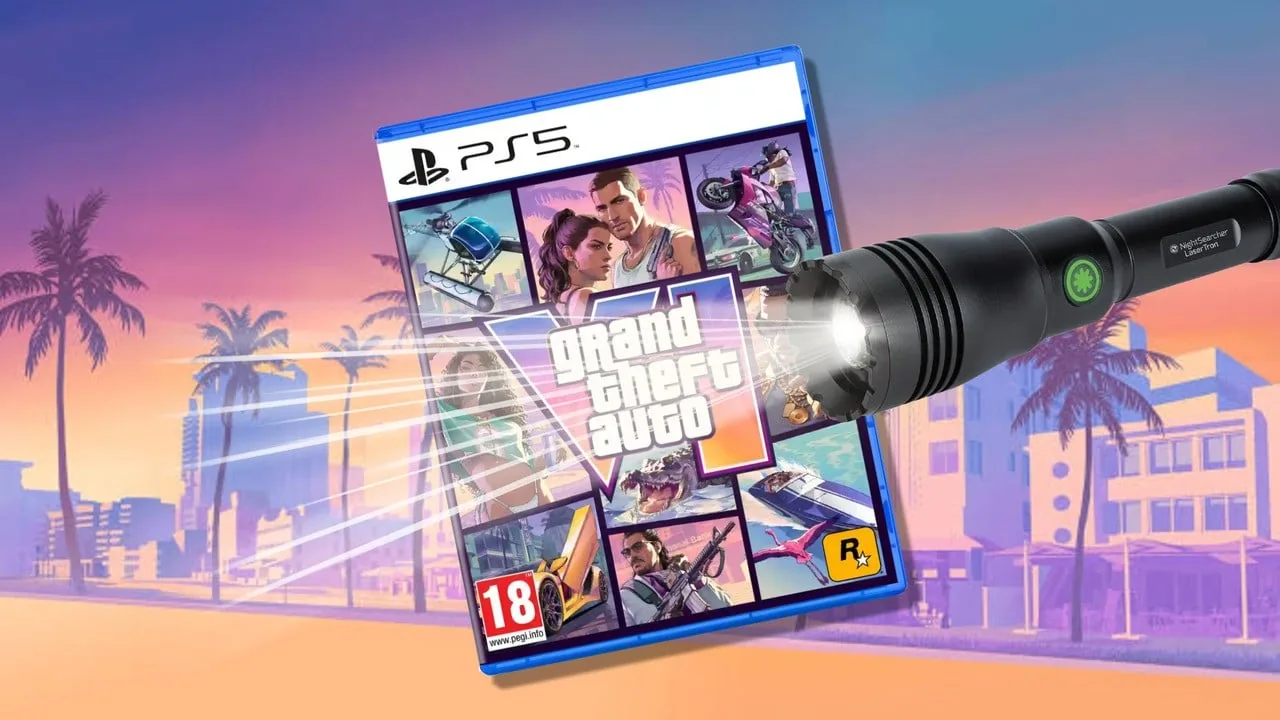
GTA VI arrives on November 19, 2026, on PS5 and Xbox Series X|S, with no PC date announced. The rulebook therefore exists before the PC version does: when the modding community that spent a decade reshaping GTA V gets hold of GTA VI, it will be working from these guidelines on day one. What they leave open is modest but real — single-player mods that respect third-party property and stay away from online services are still tolerated, and GTA BOOM reads the text as allowing anti-cheat to be disabled in Story Mode.
The clause that also kills the crossover mods
Eurogamer picked the story up the following day and singled out a rule that had gone largely unquoted: a mod may not use "protected elements of anyone else's intellectual property … including art, characters, music, photos, games, advertisements, brands or logos, real-world locations, etc." Stacked on top of the ban on mixing Rockstar titles, that closes a decade-old tradition — Arthur Morgan in Vice City, a modded Shrek wandering the map, real-world brand logos repainted onto fictional cars. Eurogamer's conclusion is direct: GTA 6 is unlikely to attract anything like the volume of oddball mods GTA 5 did. The Verge, covering the same update, focuses on the two most visible bans — no expanding or modifying storylines, plots, missions or characters, no crossover mods between Rockstar titles — and on multiplayer modding being funnelled through the official Creator Platform. In France, JV condensed the whole page into three words: "Respect our games."
Update — September 22: what the second wave adds
The story crossed into the French-language press within twenty-four hours, and the second pass filled in details the first wave had left out. Gameblog (September 21), La Crème du Gaming, Frandroid (September 22), Jeux.ca and big-n all worked the same page — and read together, they bring three groups of rules into clearer focus.
First, the content bans. Beyond third-party intellectual property, the guidelines explicitly exclude pornographic content, harassment and references promoting violent extremism (big-n; Jeux.ca). Frandroid draws the immediate illustration: a Shrek mod for GTA or Red Dead breaches DreamWorks' property just as surely as a real-world brand logo repainted onto a fictional car.
Second, likeness. Gameblog quotes the text as written: a mod may not use "the voice, image or appearance of a real person without written authorisation". Stacked on the ban on reusing Rockstar's own voiceover performances, that shuts down an entire genre — celebrity, streamer and real-face mods.
Third, the money. Frandroid notes Rockstar has not banned custom content as such — a position that would have been awkward to reverse after years of praise aimed at the modding community — but the framework is now contractual: monetisation runs through the licensed Creator Platform, built on Cfx.re, with the Cfx Marketplace and partners such as Tebex as the approved channels (Jeux.ca). The concrete casualty is the roleplay server floated by streamer Adin Ross, designed around real-money prizes for players; big-n points out the new rules make that model impossible by construction.
On one point the French coverage contradicts itself: La Crème du Gaming dates the page to September 20, while the Mod Guidelines themselves carry September 10 — the date they have displayed since publication, and the one the first wave of outlets used.
Nothing else moved: the PC version still has no date, GTA VI remains set for November 19, 2026 on PS5 and Xbox Series X|S, and non-commercial single-player modding that respects third-party property is still tolerated. Jeux.ca sums up the line as less "modding banned" than "modding re-centred": the personal sandbox survives, the semi-professional community ecosystem moves under licence.
See also
- GTA 6 on PC sooner than expected? VGC's Andy Robinson hears 'noise' that Rockstar could move the port up
- 192 GB of GTA 5 dev data leaked — and with it, a scrapped Liberty City that could resurface in GTA 6
- Rockstar officially backs NoPixel V: GTA roleplay arrives on the Rockstar Games Launcher
- GTA VI launch guide: release date, editions and pre-orders